Avito Work — Scaling Enterprise Hiring with a Self-Serve Chatbot Builder

| Year | 2018–2021 |
| Role | Senior Product Designer |
| Scope | Product Design, UI/UX, HR Tech |
| Other Avito cases | Read HRIS case |
At Avito Work’s scale, inefficiencies are not isolated problems — they become structural risks.
By 2021, automated chatbots were already central to candidate screening for enterprise employers on Avito. They handled eligibility checks, document collection, and basic qualification before a recruiter ever engaged.
However, every chatbot was still manually assembled. Each new enterprise client or scenario required coordination across product, engineering, and operations. The system technically worked, but it did not scale as a business capability.
This case study describes how we reframed chatbot creation from a custom service into a platform feature, and how design helped unlock both operational leverage and revenue growth.
Context
During my three years at Avito, I worked across the design system, internal platforms, and Avito Work — the company’s recruitment vertical.
Avito Work supports ~1 million candidates monthly, dozens of large enterprise employers (retail, FMCG, telecom), and high-volume hiring scenarios where automation is essential. Chatbots were embedded directly into Avito Messenger and surfaced across all Avito business verticals, on web and native apps. This made them a critical touchpoint in both the candidate and employer experience.
Problem framing
By the time we started this work, ~500,000 candidates were already screened via chatbots — they were a proven mechanism, but not a scalable product. The underlying issue was not adoption, but production cost. Each chatbot required manual configuration, engineering involvement, and ongoing maintenance per client. This created operational bottlenecks, slow enterprise onboarding, and limited ability to experiment or iterate. From a business perspective, chatbot screening was valuable — but constrained by how expensive it was to deliver.
The core question became:
How do we turn chatbot screening into a scalable, repeatable platform capability without increasing technical or operational load?
Design mandate & goals
The product goal was not simply to “build a builder”.
It was to:
- Shift chatbot creation from Avito teams to enterprise clients
- Remove engineering dependency from routine configuration
- Preserve safety, consistency, and integration constraints
From a business standpoint, this enabled:
- Faster onboarding of enterprise customers
- Upsells to existing clients
- Revenue growth tied to automation adoption
Design’s role was to mediate complexity: expose enough power to be useful, while hiding the underlying technical and security constraints.
Target users
Primary users were enterprise recruiters and HR teams hiring at scale: FMCG companies, retail chains, telecom providers, and other high-volume employers. These customers were already paying for Avito Work via enterprise subscriptions, needed automation but were not technical, and valued speed, predictability, and trust over flexibility. This heavily influenced how much configurability we exposed — and how opinionated the system needed to be.
My role
I worked as a Senior Product Designer, operating at a platform level across product management, UX research, and engineering. The team included 1 Senior Product Manager, UX research support, and 7 engineers. My responsibilities focused on framing the problem as a systems challenge (not a feature request), defining UX principles that balanced scale, safety, and usability, driving early concept validation and scope alignment, translating business and technical constraints into a coherent product model, and supporting delivery through specs, reviews, and iteration. I owned the design direction end-to-end, from problem framing to post-launch refinement.
Process at a glance
We began with usage analysis and qualitative research: how recruiters currently screened candidates, how chatbots were assembled internally, and where manual effort and errors accumulated. A consistent pattern emerged: creating a chatbot felt like an engineering workflow, not a product experience. I conducted interviews with enterprise HR teams, sessions with candidates who had completed chatbot screenings, and internal audits of existing chatbot configurations. Together with the product manager, I formed an initial product hypothesis, explored multiple solution models, pressure-tested them against security, integration, and operational constraints, and aligned stakeholders on tradeoffs early, before committing to build.
Ideation & system design
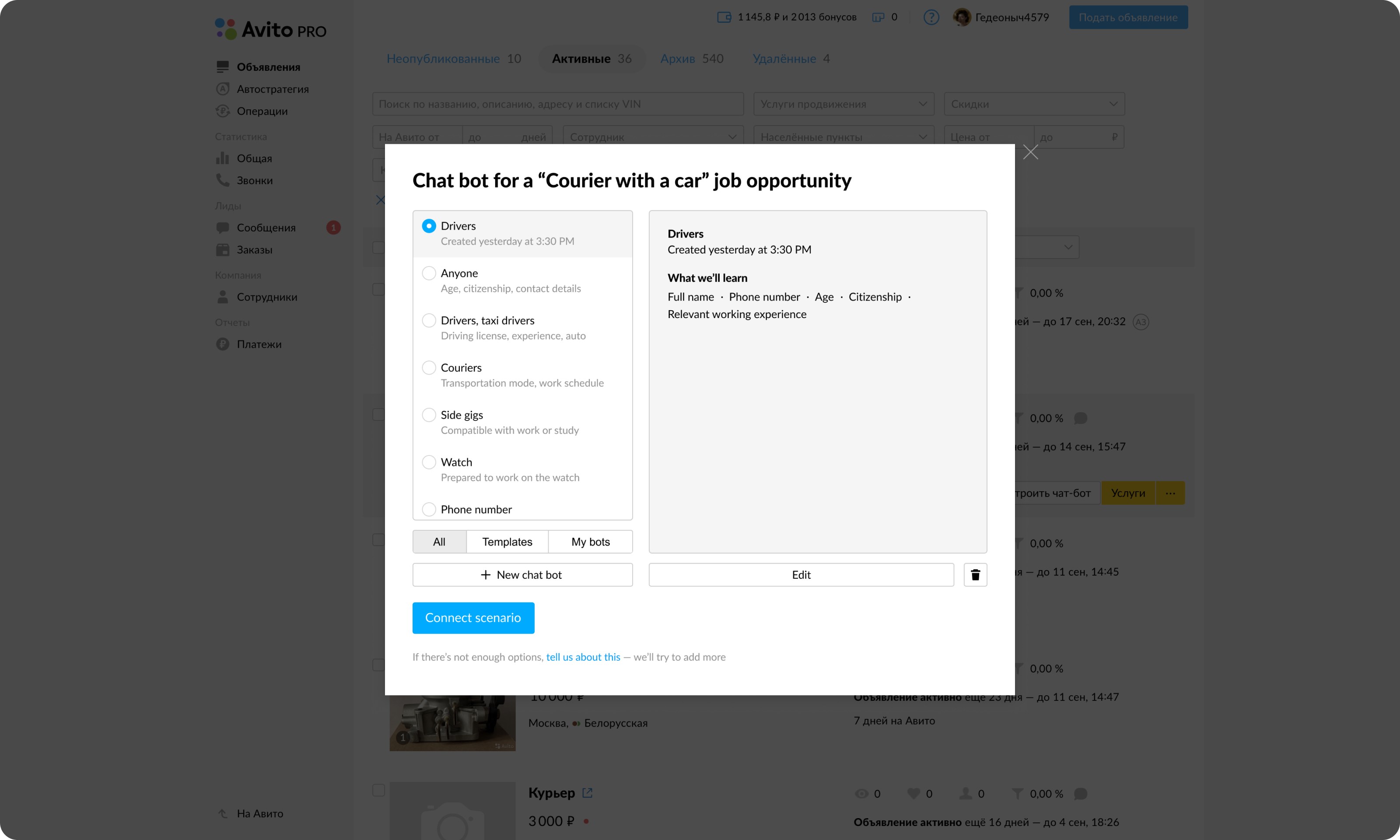
Early exploration looked at familiar no-code paradigms: spreadsheet-like logic, rule builders, and visual flow editors. However, security requirements ruled out third-party tools, and internal integrations required strict control over data and behavior. Rather than rebuilding from scratch, we chose to build on top of an existing internal chatbot foundation and invest design effort in abstraction and usability, not raw flexibility. Key design decisions included opinionated templates for common screening scenarios, linear guided dialog construction instead of free-form logic, smart defaults over blank states, and visual clarity over maximum expressiveness. The result was a system that felt simple on the surface, while remaining robust underneath.
Results & impact
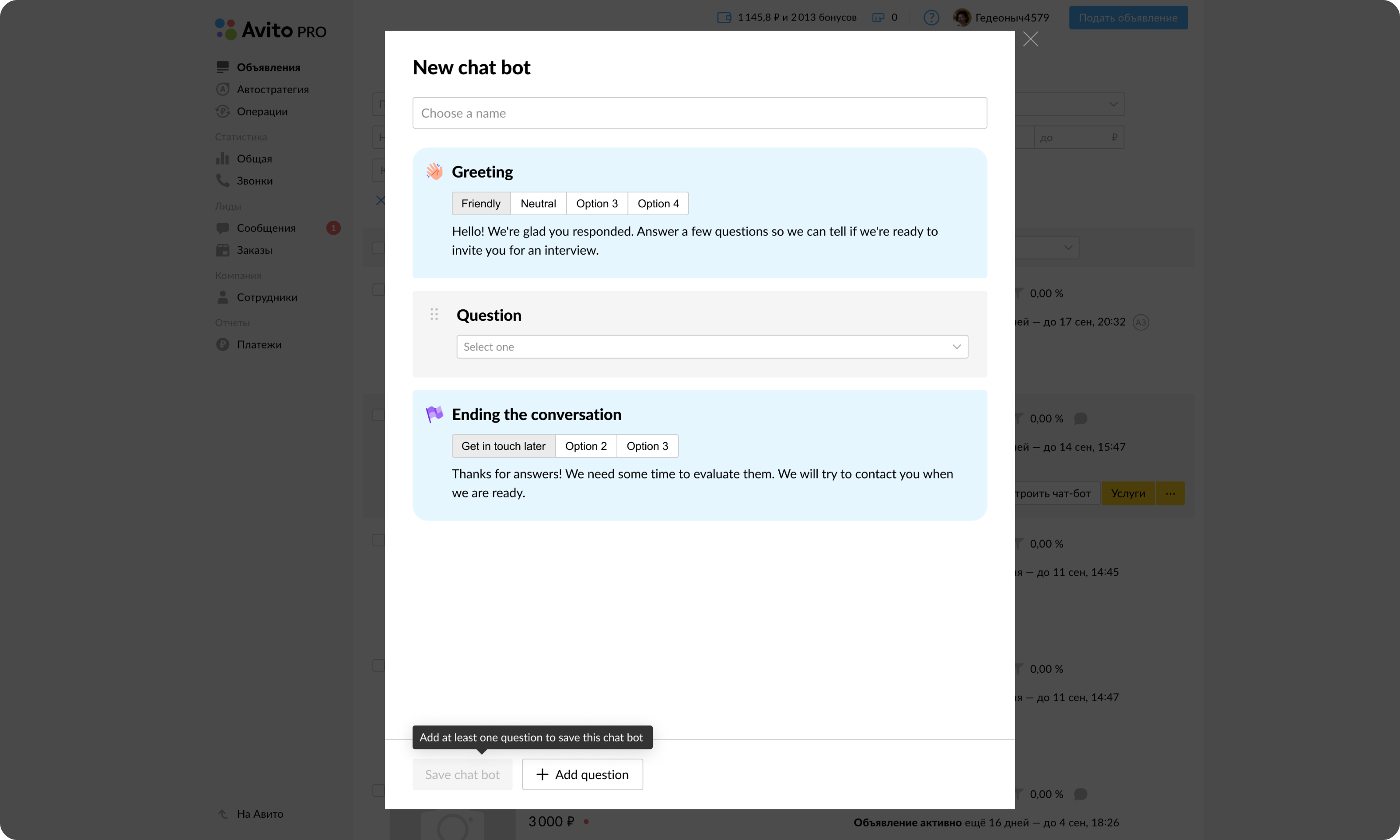
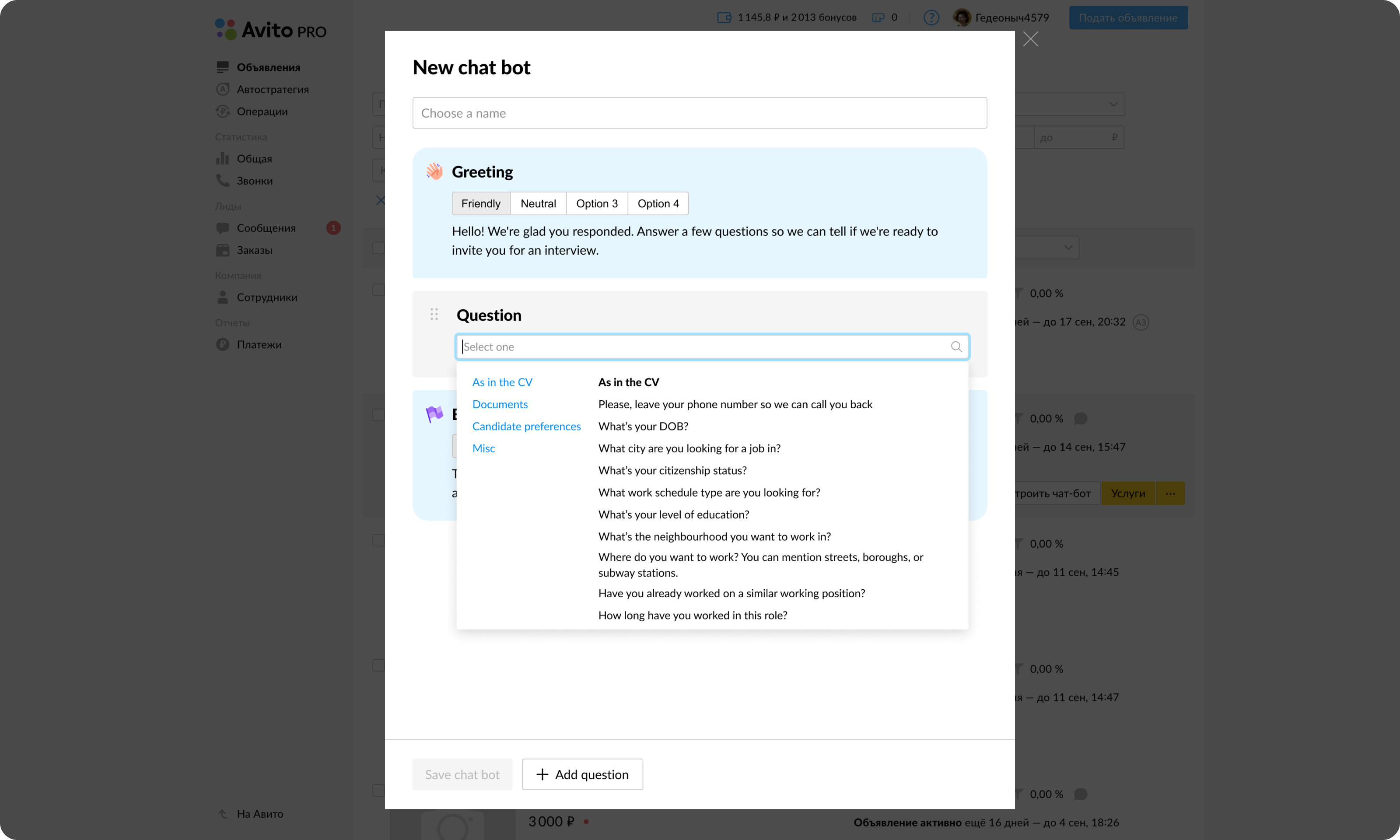
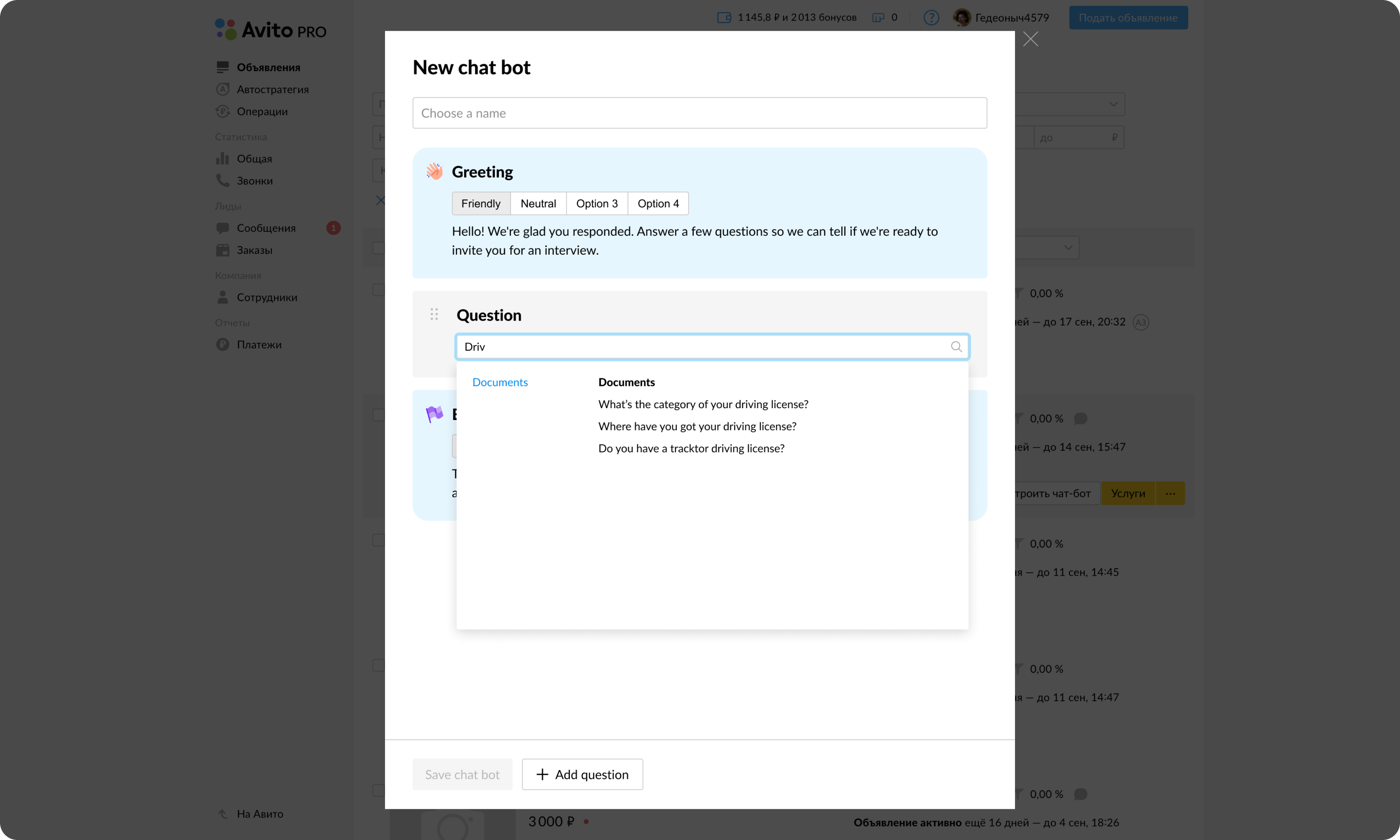
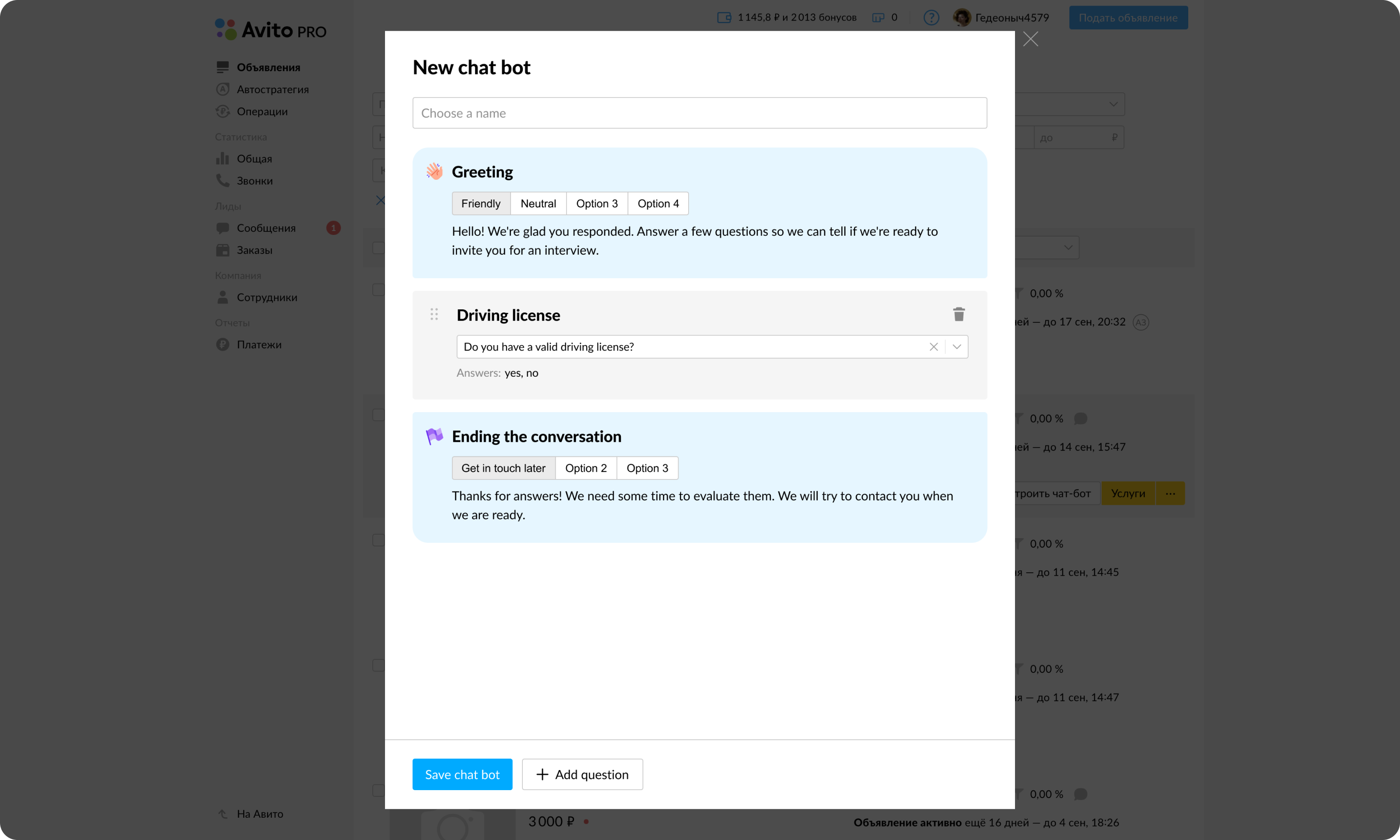
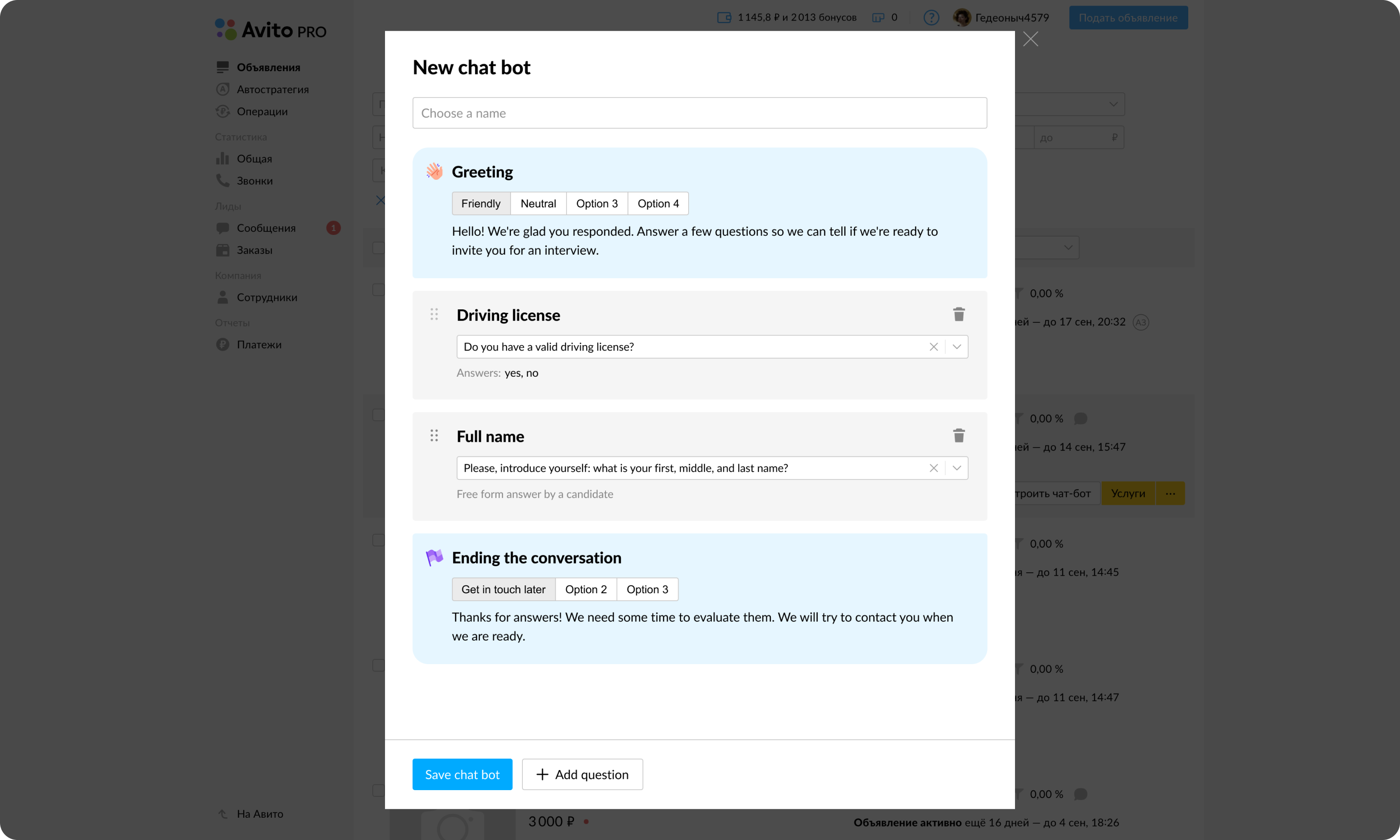
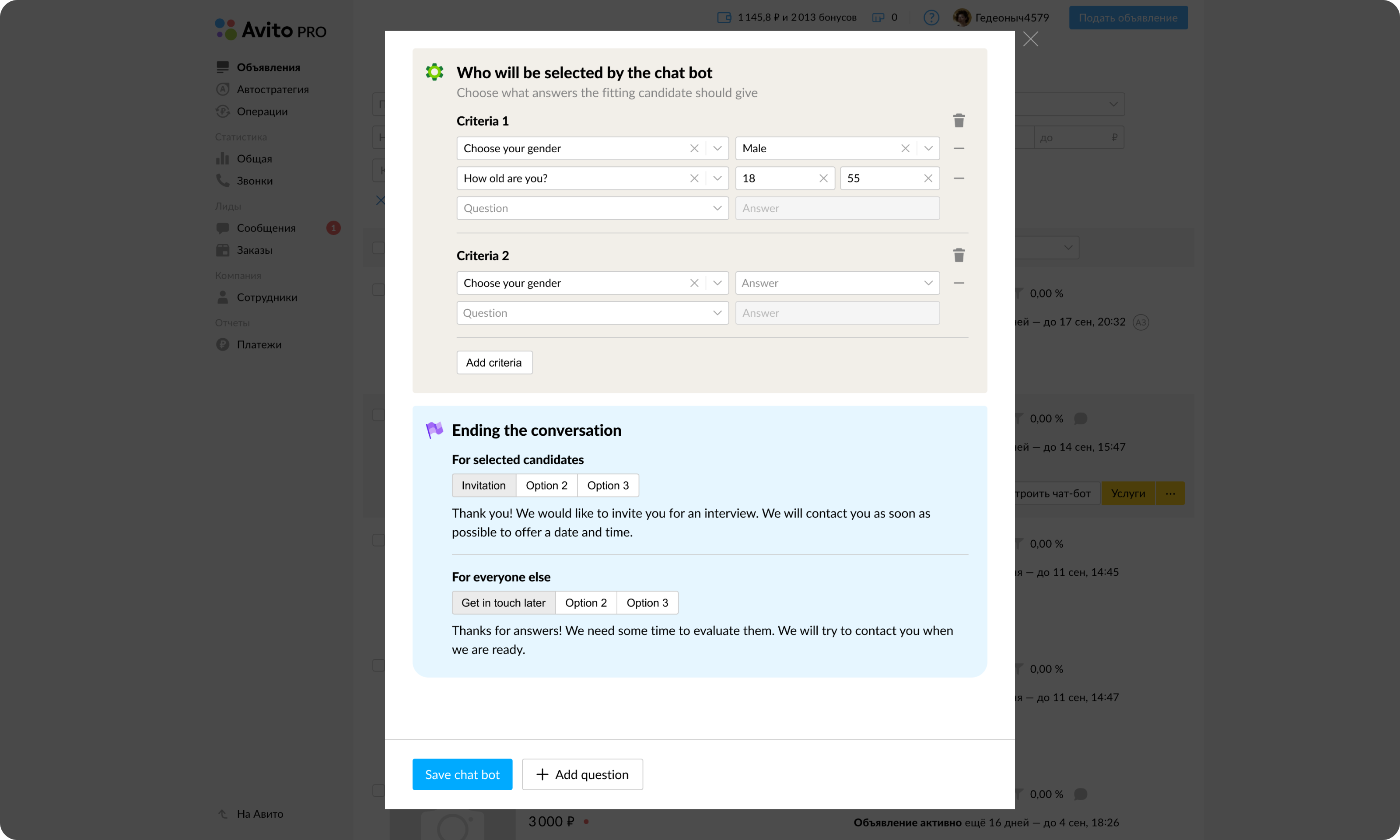
The chatbot builder shipped in under two months.
Critically, Avito Work was able to scale enterprise hiring workflows without scaling operational cost — shifting chatbot creation from a service model to a product capability.
Reflection
This project reinforced several principles I carry into platform-level work: scalability is often a design problem disguised as a tooling issue; opinionated systems outperform flexible ones at enterprise scale; and design leverage comes from deciding what not to expose. By reframing chatbot creation as a platform concern rather than a one-off feature, we unlocked impact across product, operations, and revenue — without increasing system complexity for users.