Beacon — Designing for Supply Chain Visibility

| Year | 2021–2022 |
| Role | Senior Product Designer |
| Scope | Product Design, UI/UX, Data Visualization, Prototyping |
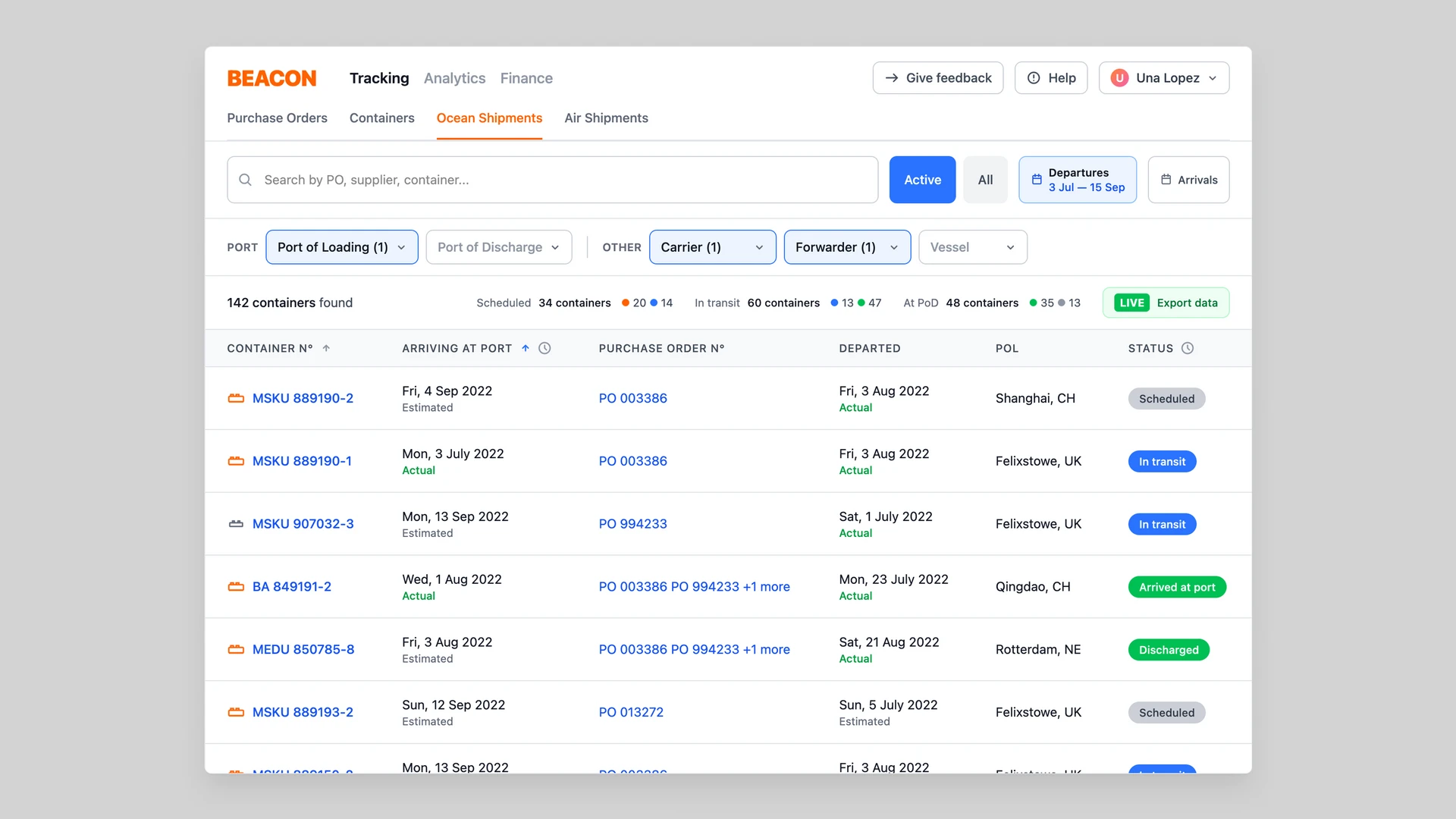
When I joined Beacon in 2021, the company was already making waves in freight and logistics. Beacon positioned itself as a digital supply chain platform — but in practice, our clients were still wrestling with something more mundane: giant spreadsheets.
Take Liza, a shop owner in Knightsbridge. She imports a couple of containers of furniture every season. For her, a successful shipment means knowing exactly when her chairs and tables will arrive, how to plan stock, and when to run her sales campaign. Instead of a simple answer, she was staring at endless rows of vessel IDs, customs codes, and estimated arrival times.
At Beacon, we wanted to answer her most important question:
Where is my stuff?
The problem we faced
Beacon's Track & Trace platform displayed data from multiple sources: carriers, ports, customs, trucking companies. But showing data wasn't enough. Users had to parse it manually, often spending days moving information from Excel into their own systems.
Feedback was blunt:
I spend days moving around Excel rows.
We want it to be more interactive.
Smarter software, not a fancier spreadsheet.
Internally, our sales team had nudged us too. The product wasn't "loveable enough." To grow beyond the freight business, Beacon had to become an analytics company — not just a data dump.
My role
I was the sole designer in the Track & Trace squad. My responsibilities stretched across discovery, prototyping, and delivery: running and synthesising interviews (I led 3–4 myself and reviewed the rest), mapping pain points with our PM and engineers, prototyping early concepts and using them to get alignment across teams, writing specs in Figma and Jira and working side-by-side with engineers, presenting design rationale to C-level stakeholders to secure buy-in, and overseeing rollout of our Beta v2 from a design perspective. In short: if I hadn't been there, the project would have lacked validated flows, actionable UI solutions, and a consistent vision.
How we approached it
The challenge was simple to describe but complex to solve: all data looked important, and none of it was actionable.
Discovery
We began with interviews: 11 external clients, plus our own Freight Managers (4). Their feedback clarified where manual work piled up and what "actionable insights" could actually mean.
Ideation
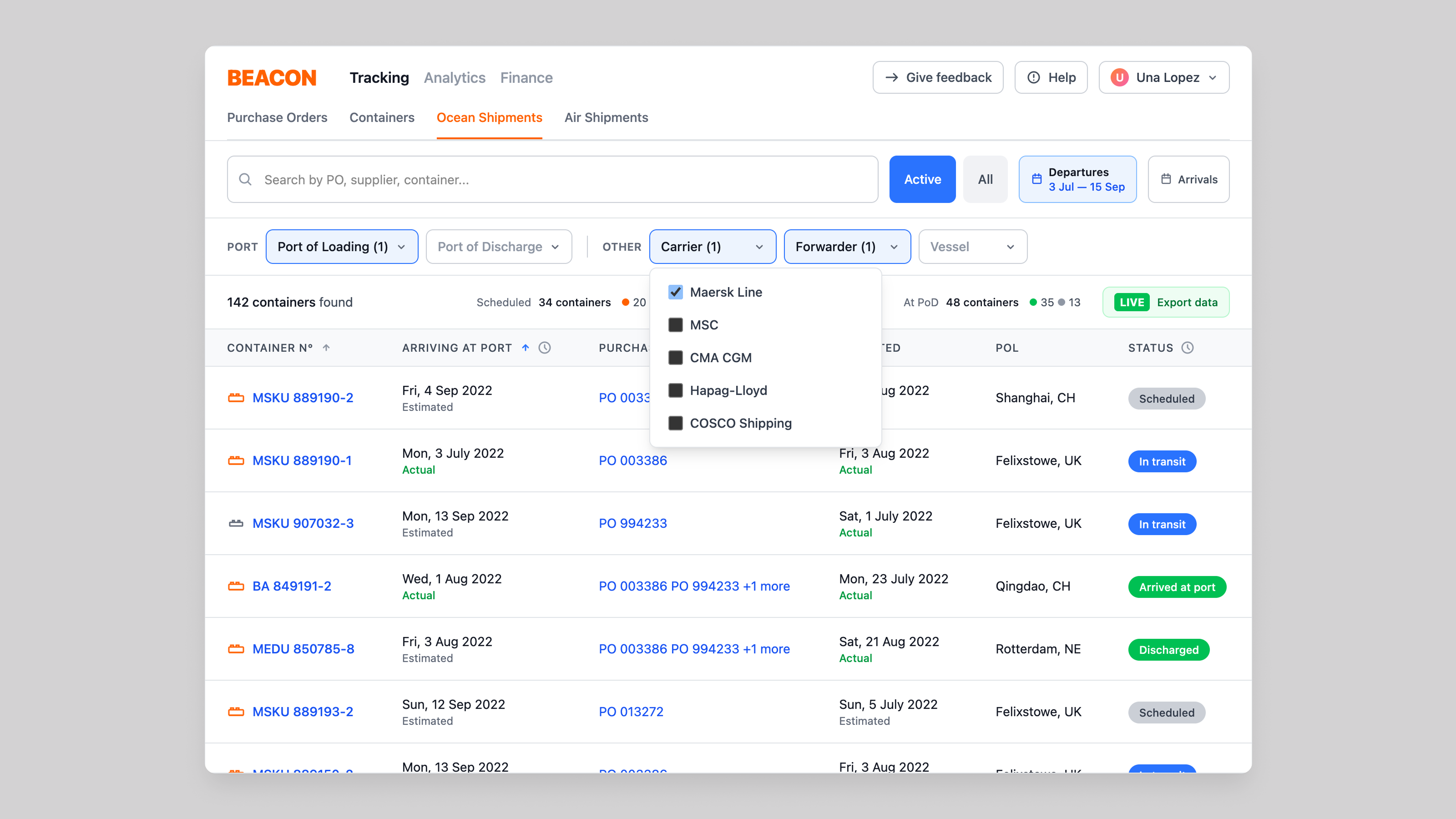
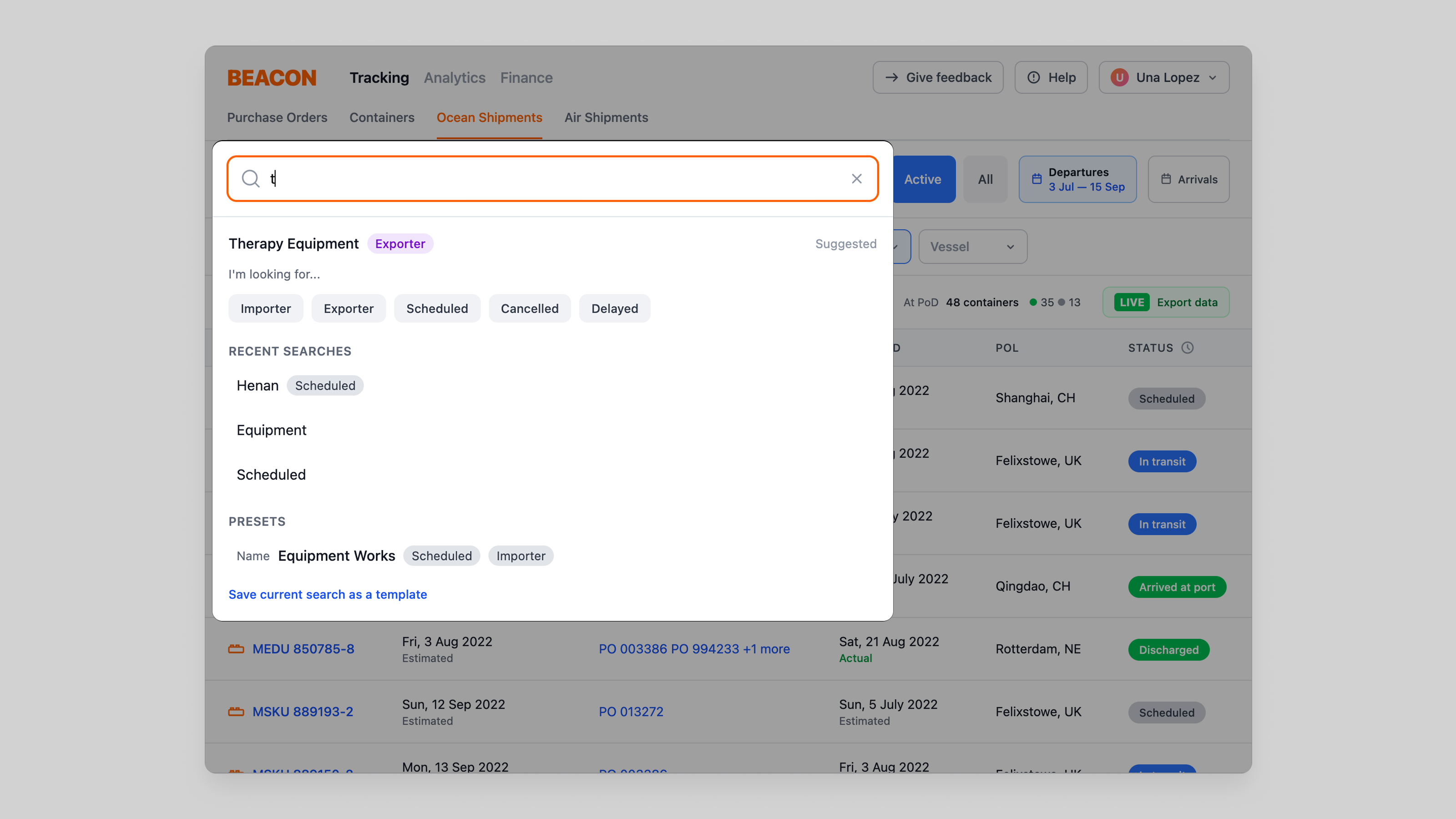
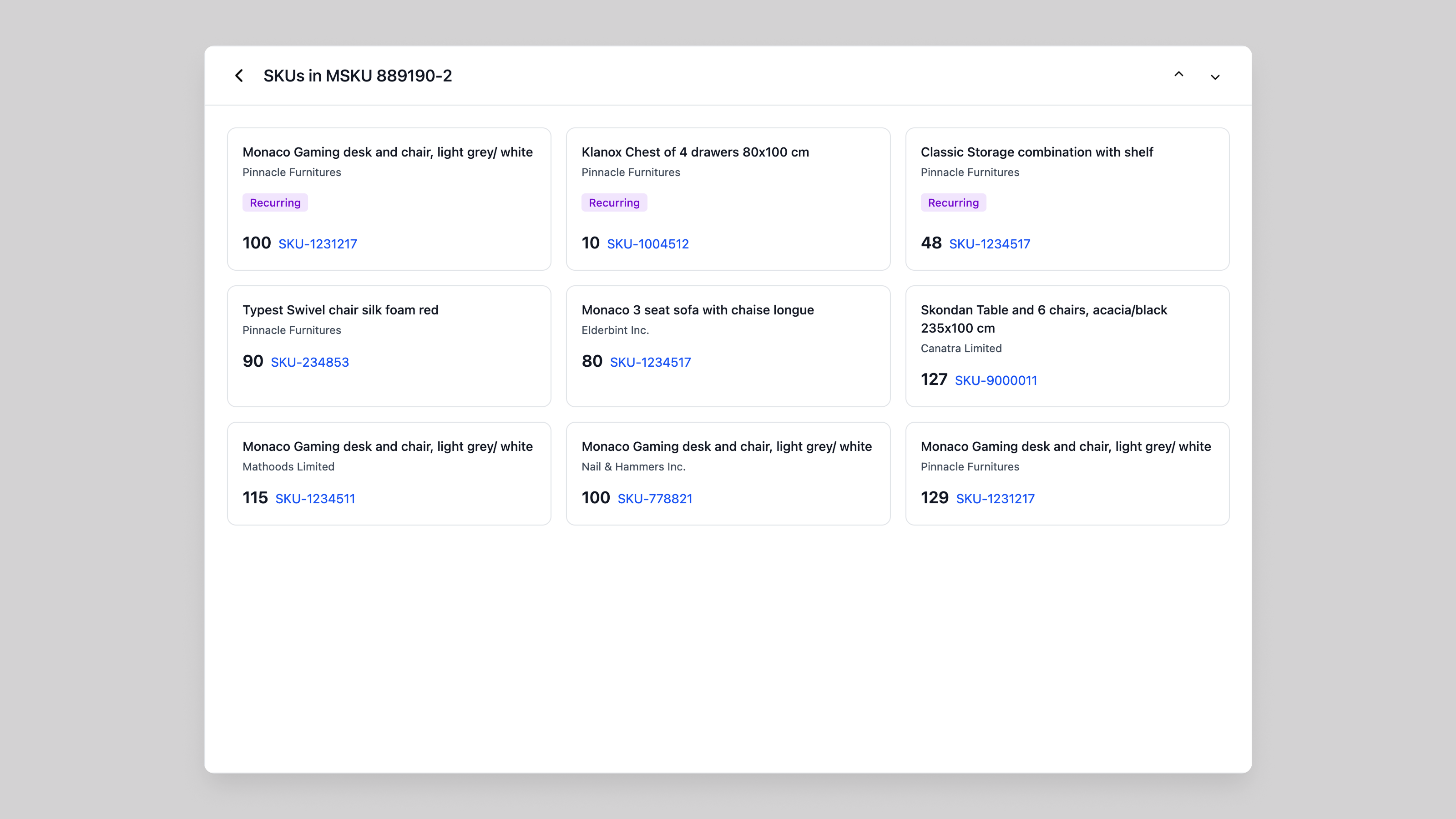
From these insights, I framed several design directions: Verticals (scalable, expandable data views), Control Tower (actionable insights layered on top of raw data), Omni-search (a universal way to cut across fragmented records), and Container view with SKUs (transparency down to the item level). Prototypes helped the team and stakeholders move beyond abstract debates. Instead of "should we show this field or not?", we were pointing to concrete flows and debating tradeoffs.
Testing
We ran usability sessions as soon as we had clickable flows. After launch, I interviewed 22 users: 17 found the flow intuitive and passed tasks successfully, 3 struggled but wanted to continue, and 2 didn't see the impact — a clear sign of where onboarding was lacking.
Results
By mid-2022, we shipped Beta v2 of Track & Trace.
The impact was tangible:
6 enterprise clients were onboarded in the first months. Manual data-cleaning time reduced by 42%, saving an estimated 5,500 hours annually. Shipment tracking accuracy improved by 27%. Internal adoption was strong: 82% of Freight team members rated the new flow positively. Most importantly, Beacon could now credibly position itself not as a freight forwarder, but as a tech-driven analytics partner.
Challenges and tradeoffs
We faced constant tension between transparency and automation. Clients wanted actionable insights, but they also wanted to "see the raw data" in case of disputes. Our solution was to present both: insights up front, data always accessible.
We were also bound by Beacon's in-house design system ("Kargo"), which meant some patterns felt heavier than I'd have liked. And because we launched fast, onboarding was undercooked — something I'd improve if given another iteration.
Learnings
Looking back, three lessons stand out: be braver with tests — we didn't need to validate every pixel with users; speed mattered more. Don't over-debate established patterns; sometimes the simplest convention is the right choice. And cognitive load matters: in hindsight, we should have invested earlier in onboarding to help new users acclimate quickly.
Closing thoughts
Beacon gave me the chance to tackle one of the world's least "sexy" but most important questions — global logistics. It also reminded me that even in conservative industries, design can transform the experience from wrestling with spreadsheets into gaining actionable insights. The journey from raw data to insight wasn't just a design challenge. It was a company-level pivot. And it was gratifying to see my work directly support that shift.